Understanding SS31 Peptide: Properties, Applications, and Cautions
4/26/20267 min read
Introduction to SS31 Peptide
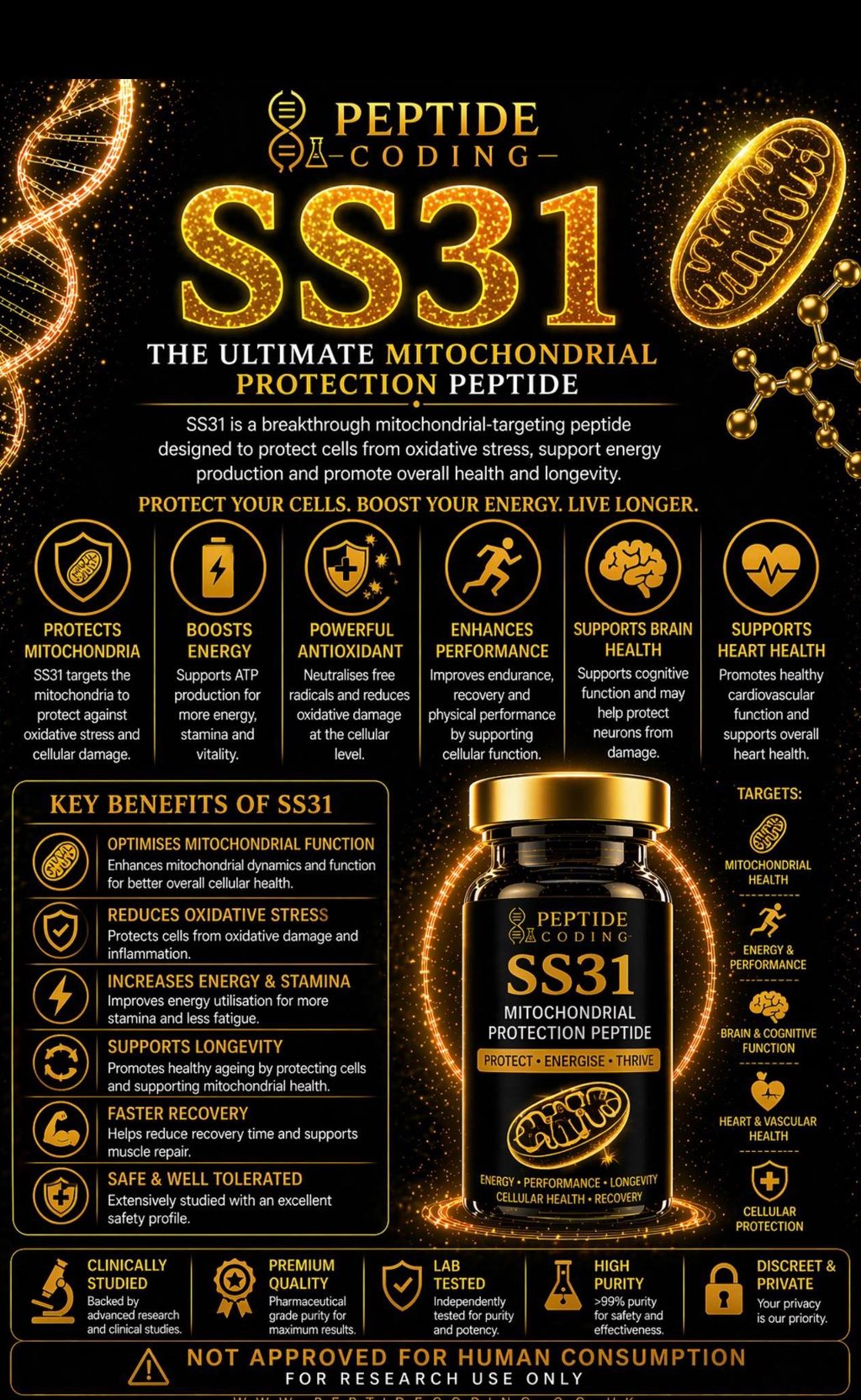
SS31 peptide, also known as Elamipretide, is a synthetic peptide composed of 10 amino acids, specifically designed to target the mitochondria within cells. It falls under the category of bioactive peptides due to its unique structure and properties that confer various biological effects. SS31 was initially developed in the context of biomedical research to address mitochondrial dysfunction, which is increasingly recognized as a contributor to a wide range of diseases, including neurodegenerative disorders and metabolic syndromes.
The molecular structure of SS31 is characterized by its efficient ability to penetrate biological membranes and selectively accumulate in the inner mitochondrial membrane. Its composition includes a positively charged N-terminus and stabilizing hydrophobic regions that facilitate its mitochondrial targeting capability. This design enables SS31 to exert protective effects against oxidative stress and improves mitochondrial function, making it a subject of interest in therapeutic applications.
Developed through rigorous scientific investigation, SS31 has been shown to enhance cellular respiration and reduce oxidative damage, thereby promoting cell viability under stressful conditions. Studies have revealed its potential role in improving energy metabolism and reducing inflammation, which are critical factors in the pathophysiology of various medical conditions. The peptide's favorable pharmacokinetic profiles and safety profile in early clinical trials underscore its promising application in regenerative medicine, particularly in treating conditions characterized by mitochondrial impairment. Understanding SS31 peptide's properties is essential for expanding its applications further in both research and clinical settings.
Mechanism of Action of SS31 Peptide
The SS31 peptide, known for its potential therapeutic applications, plays a significant role in cellular metabolism by acting as a mitochondria-targeted antioxidant. Its primary mechanism of action involves the stabilization of the mitochondrial membrane potential, which is crucial for maintaining cellular energy production. By binding to the inner mitochondrial membrane, SS31 enhances mitochondrial functionality and promotes the efficient production of adenosine triphosphate (ATP), the energy currency of the cell.
Furthermore, SS31 peptide exerts its protective effects by combating oxidative stress, a condition characterized by the overproduction of reactive oxygen species (ROS). Elevated ROS levels can lead to cellular damage, contributing to various pathologies including neurodegenerative diseases, cardiovascular dysfunction, and metabolic disorders. SS31 facilitates the neutralization of these harmful ROS, thereby mitigating oxidative damage and promoting cellular health.
This peptide also influences several signaling pathways associated with cell survival and apoptosis. By modulating these pathways, SS31 assists in reducing cellular apoptosis triggered by oxidative stress, thus fostering cell viability under adverse conditions. Additionally, the peptide's unique structure allows it to penetrate cellular membranes effectively, which is essential for its delivery to the mitochondria where it exerts its protective actions.
In summary, the mechanism of action of SS31 peptide is centered on its ability to protect mitochondria from oxidative injury, enhance ATP production, and support cellular integrity. As research continues, the full extent of SS31's biochemical properties may unveil further applications in the treatment and management of various diseases associated with mitochondrial dysfunction.
Potential Therapeutic Uses of SS31 Peptide
The SS31 peptide, recognized for its mitochondrial protective properties, presents a promising avenue for therapeutic interventions across various medical domains, particularly in cardiology, neurology, and metabolic disorders. Research is ongoing into its ability to mitigate damage associated with several health conditions, highlighting its potential benefits in these fields.
In cardiology, SS31 has drawn attention due to its capacity to protect cardiac tissues from oxidative stress and apoptosis, particularly following ischemic events. Studies indicate that the administration of SS31 may enhance mitochondrial function, thereby improving cardiac recovery and reducing infarct size in patients suffering from myocardial infarction. This application demonstrates the peptide's potential to play a critical role in cardiovascular health, especially in managing acute cardiac conditions.
In the realm of neurology, SS31 peptide's neuroprotective effects are being investigated to address neurodegenerative diseases such as Alzheimer's and Parkinson's. The mechanism involves promoting mitochondrial function and reducing oxidative damage within neuronal cells, ultimately aiming to slow down the progression of these debilitating diseases. Preliminary studies have shown encouraging results, paving the way for further clinical trials to explore SS31’s efficacy in enhancing cognitive function and protecting against neurodegeneration.
Similarly, the therapeutic potential of SS31 extends to metabolic disorders. Research indicates that the peptide could play a role in managing conditions like obesity and type 2 diabetes by improving mitochondrial efficiency and reducing inflammation. The modulation of metabolic pathways through SS31 application may lead to better clinical outcomes for patients struggling with these prevalent conditions.
Overall, the ongoing investigations into SS31 peptide's applications across these diverse medical fields suggest a significant promise, underlining the importance of continued research to fully understand its therapeutic potential and mechanisms of action.
Current Status of SS31 Peptide Research
The research surrounding SS31 peptide has garnered significant attention in recent years, driven primarily by its potential therapeutic applications and efficacy in various health contexts. SS31, a mitochondrial-targeting peptide, is primarily studied for its protective role in diseases associated with mitochondrial dysfunction, including neurodegenerative disorders and cardiovascular conditions. Recent preclinical studies have highlighted its ability to mitigate oxidative stress and promote mitochondrial integrity, paving the way for further investigation.
Recent trials have indicated that SS31 can enhance mitochondrial function, thereby improving cellular energy metabolism. Several preclinical studies involving animal models have demonstrated its efficacy in reducing neurodegeneration, particularly in conditions such as Alzheimer's disease and Parkinson's disease. These promising outcomes have prompted researchers to advance towards clinical trials, with several being conducted to evaluate its safety and efficacy in human subjects.
In the clinical research spectrum, ongoing studies are closely examining the pharmacokinetics and pharmacodynamics of SS31. Early-phase trials have focused on dose-responses and have begun to assess the peptide's therapeutic potential on a broader scale. Importantly, the safety profile of SS31 appears encouraging, with reported adverse effects being minimal. This aspect is crucial for moving towards larger cohort studies and diverse patient populations.
The scientific community remains cautiously optimistic about SS31 peptide, recognizing its substantial promise based on preliminary data. Nevertheless, as with all emerging therapies, further empirical data is essential to establish definitive conclusions regarding its efficacy and safety. Research efforts will continue to unlock the full potential of SS31, which may significantly impact the management of various mitochondrial-related disorders.
Safety and Regulatory Considerations
As interest in the SS31 peptide continues to grow, it is essential to approach its use with careful consideration of the safety and regulatory framework governing peptides. Notably, SS31 is not approved by the U.S. Food and Drug Administration (FDA) for human consumption. This lack of regulatory approval indicates that there exists limited clinical evidence regarding its safety and efficacy in humans. Potential users should be aware that just because a compound is available for research or alternative use does not signify it is safe or recommended for general use.
The regulatory landscape for peptides, including SS31, is complex and may vary significantly between jurisdictions. While some peptides might be designated as research chemicals and available for sale, others may fall under stricter control depending on their intended application and the presence of specific claims regarding their effects on human health. It is crucial to ensure compliance with local regulations and to understand any legal implications associated with purchasing or using such compounds.
Furthermore, consumers must consider potential health risks when using peptides, including SS31. Usage may lead to unpredictable effects on health or interaction with other medications, particularly since peptides can influence physiological pathways in unforeseen ways. Individuals with pre-existing medical conditions or those taking prescription medications should consult healthcare professionals prior to usage.
Ultimately, while the SS31 peptide shows promise in areas such as mitochondrial function and may be a topic of considerable academic research, caution is advised. The absence of FDA approval necessitates a thorough understanding of the associated risks and safety considerations, as well as a vigilant approach to its potential impacts on a person's overall health.
Future Directions for SS31 Peptide Research
The SS31 peptide, recognized for its promising roles in mitochondrial protection and cellular health, is poised for a dynamic future in the realm of biomedical research. As scientists continue to delve into its unique properties, we anticipate potential breakthroughs that could significantly enhance our understanding of mitochondrial dysfunction and its implication in various diseases. With ongoing investigations, the SS31 peptide may reveal new therapeutic avenues for conditions such as neurodegenerative disorders, cardiovascular diseases, and metabolic syndrome.
One area of interest lies in the optimization of SS31 for targeted therapeutic delivery. Future studies are expected to explore the feasibility of combining SS31 with advanced drug delivery systems, potentially enhancing its efficacy. Research into the peptide's structure-activity relationship could lead to the design of more potent analogs, broadening its range of therapeutic applications. As methodologies in proteomics and genomics advance, understanding SS31’s interactions at molecular levels could unveil new functional capacities that have yet to be explored.
Moreover, collaboration between academia and industry is likely to catalyze the translation of basic research into clinical applications, emphasizing the importance of multidisciplinary approaches in SS31 peptide studies. As data accumulates from clinical trials investigating SS31’s efficacy, insights derived from these studies will shape future research directions and could inform guidelines for its use in treating specific health conditions.
In conclusion, the future of SS31 peptide research holds great promise, with the potential for innovative applications arising as a result of rigorous scientific inquiry. Continued funding and support for this line of research will be crucial in uncovering the full potential of SS31 in improving human health.
Conclusion
In conclusion, SS31 peptide is a promising biomolecule that has garnered significant attention within the scientific and medical communities. This peptide demonstrates a unique ability to target mitochondrial function, protecting cells from oxidative stress and potential damage. Research indicates that SS31 may play a crucial role in various applications, especially in the context of neurodegenerative diseases, cardiac health, and metabolic syndromes. Its antioxidant properties position it as a potential therapeutic agent capable of improving mitochondrial efficiency and overall cellular health.
While the potential applications of SS31 peptide are compelling, it is imperative to approach its use with caution. As with any emerging therapeutic agent, thorough research is necessary to fully understand its efficacy, optimal dosing, and safety profile. Current studies provide a preliminary understanding, but they also highlight the importance of further clinical trials to ascertain the long-term effects and potential risks associated with SS31 administration.
As developments in the field of peptide research continue to evolve, it remains essential for both the scientific community and the general public to stay informed about new findings related to SS31 peptide. Ongoing research may lead to advancements that further clarify its applications and safety. Therefore, maintaining an awareness of the latest studies is crucial for anyone interested in the potential benefits of SS31 peptide in medical treatments.